

Direct Thermal vs. Thermal Transfer Labels
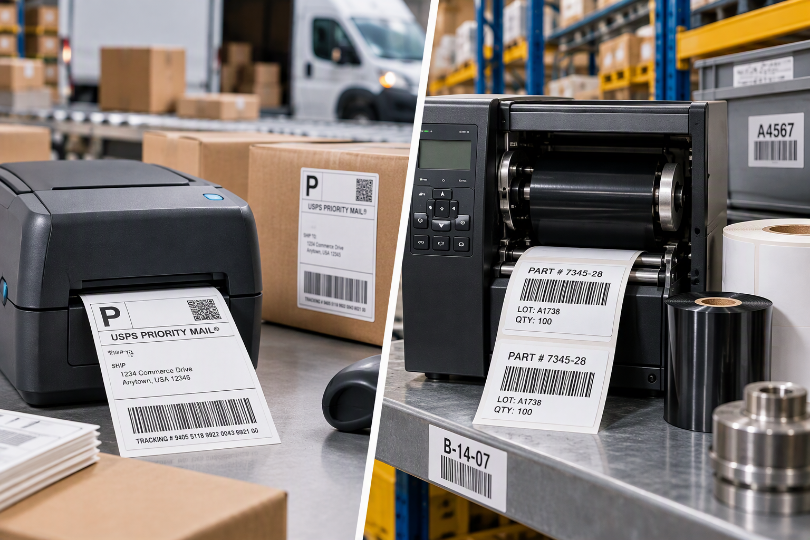
Direct Thermal vs. Thermal Transfer Labels: Understanding the Differences and Choosing the Right Solution
If you're purchasing labels for shipping, warehousing, manufacturing, or inventory management, one of the most important decisions you'll make is choosing between direct thermal and thermal transfer labels. While both technologies are widely used across industries, they serve different purposes and perform differently depending on the environment and application.
Selecting the wrong label type can lead to unreadable barcodes, faded print, increased replacement costs, and disruptions to your operations. Understanding the strengths and limitations of each option will help ensure you get the best performance and value from your labeling system.
What Are Direct Thermal Labels?
Direct thermal labels are manufactured using a heat-sensitive coating that darkens when exposed to heat from a thermal printer's printhead. Unlike traditional printing methods, direct thermal printing does not require ink, toner, or ribbons.
As the printer applies heat to specific areas of the label surface, text, barcodes, and graphics are created directly on the material.
Because there are fewer consumables involved, direct thermal printing is often considered one of the most cost-effective and efficient solutions for high-volume labeling operations.
Advantages of Direct Thermal Labels
- No ribbon required
- Reduced supply costs
- Faster media changes
- Simpler printer operation
- Excellent barcode quality
- Ideal for high-volume shipping environments
Many e-commerce businesses, distribution centers, and fulfillment operations rely on direct thermal labels due to their simplicity and lower cost of ownership.
Common Applications
Direct thermal labels are commonly used for:
- Shipping labels
- Parcel tracking labels
- Order fulfillment labels
- Retail receipts
- Temporary barcode labels
- Food service labeling
- Visitor badges
These applications generally involve labels that are used for days, weeks, or a few months rather than years.
What Are Thermal Transfer Labels?
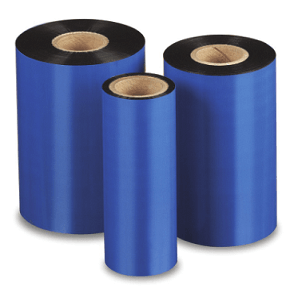
Thermal transfer labels use a specialized ribbon that transfers ink onto the label surface through heat and pressure. Instead of printing directly onto heat-sensitive material, the printer melts ribbon material onto the label to create the image.
This process results in a highly durable print that resists fading, scratching, moisture, chemicals, and UV exposure.
For applications where labels must remain readable for extended periods, thermal transfer technology is often the preferred solution.
Advantages of Thermal Transfer Labels
- Long-lasting print quality
- Excellent barcode durability
- Resistance to abrasion
- Better moisture resistance
- Improved chemical resistance
- Suitable for harsh environments
- Wide variety of label materials available
When long-term performance matters, thermal transfer labels typically provide the most reliable results.
Common Applications
Thermal transfer labels are frequently used for:
- Asset tracking
- Manufacturing labels
- Product identification
- Compliance labeling
- Laboratory labeling
- Inventory control
- Warehouse racking labels
- Industrial applications
These environments often require labels to remain legible for months or years.
Direct Thermal vs. Thermal Transfer: Key Differences
Print Method
Direct thermal printing uses heat-sensitive media and does not require a ribbon.
Thermal transfer printing requires a ribbon to transfer an image onto the label surface.
Operating Costs
Direct thermal labels generally have lower day-to-day supply costs because ribbons are not required. Businesses focused primarily on short-term label applications often choose direct thermal technology for this reason.
Thermal transfer systems require ribbons, which increases consumable costs but often provides superior durability and longevity.
Durability
This is one of the biggest differences between the two technologies.
Direct thermal labels can be affected by:
- Heat
- Sunlight
- Abrasion
- Certain chemicals
- Extended storage periods
Thermal transfer labels are significantly more resistant to environmental factors and are often chosen for mission-critical labeling applications.
Lifespan
Direct thermal labels perform exceptionally well for short-term needs but may fade over time when exposed to adverse conditions.
Thermal transfer labels are designed for long-term readability and are often used when labels need to remain intact for years.
Print Quality
Both technologies can produce sharp, scannable barcodes and clear text.
However, thermal transfer printing often maintains that quality longer because the image is bonded to the label through a durable transfer process.
Which Label Type Is Best for Shipping Labels?
For most shipping operations, direct thermal labels are the preferred solution.
Packages are typically delivered within days or weeks, making long-term durability unnecessary. The lower operating cost and ease of use make direct thermal labels an ideal choice for:
- E-commerce businesses
- Fulfillment centers
- Third-party logistics providers
- Distribution facilities
This is why many popular shipping systems and platforms utilize direct thermal label technology.
Which Label Type Is Best for Warehouse Applications?
The answer depends on how the labels will be used.
For temporary inventory labels and short-term tracking applications, direct thermal labels are often sufficient.
For warehouse locations, rack labeling, asset management, and inventory systems where labels must remain readable for extended periods, thermal transfer labels are usually the better investment.
The increased durability can reduce replacement costs and improve barcode scanning reliability over time.
Choosing the Right Printer
Before purchasing labels, it's important to confirm compatibility with your printer.
Some printers support only direct thermal media, while others support both direct thermal and thermal transfer printing.
Popular industrial printer manufacturers often offer models capable of handling either technology depending on your operational requirements.
Always verify printer specifications before ordering labels and ribbons.
Making the Right Choice for Your Business
There is no universal "best" label technology. The right solution depends on your environment, budget, and performance requirements.
Choose Direct Thermal Labels if:
- You primarily print shipping labels
- Labels are used short-term
- Cost efficiency is important
- Labels are stored indoors
- Fast printing and simplicity are priorities
Choose Thermal Transfer Labels if:
- Labels must last long-term
- Products are exposed to sunlight or heat
- Barcodes must remain readable for years
- Labels encounter chemicals or moisture
- Durability is critical to operations
Final Thoughts
Understanding the differences between direct thermal and thermal transfer labels can help improve operational efficiency, reduce supply costs, and ensure consistent barcode performance across your organization.
Whether you're shipping thousands of packages each week or managing inventory throughout a warehouse, selecting the appropriate label technology is essential for long-term success.
At RhinoLabel, we offer a complete selection of direct thermal labels, thermal transfer labels, tags, cards, and related labeling supplies to support businesses of every size. If you're unsure which label solution best fits your application, our team is ready to help you find the right product for your needs.